
Set against the research-focused backdrop of The James Hutton Institute in Invergowrie, Arable Futures 2026 brought together around 110 voices from across Scotland’s agricultural landscape. Farmers, researchers, policymakers and industry representatives gathered with a shared goal: to address how the arable sector can remain productive, resilient and economically viable in an era defined by climate change, shifting markets and evolving policy frameworks.
What emerged was not a search for a single solution, but a collective recognition that the future of arable farming will depend on how well people, systems and supply chains adapt together. The event moved beyond a narrow focus on crops and machinery, to frame agriculture as part of a wider social, environmental and economic system.
A sector defined by uncertainty and opportunity
The opening discussions made one point clear: the future of arable farming will not be shaped by any single silver bullet. Instead, it will be defined by uncertainty, disruption and increasing interconnectedness.
Climate change dominated the conversation. Participants spoke of more intense rainfall, longer dry periods and growing pest and disease pressures. These shifts are already influencing decision-making, pushing farmers to reassess everything from crop choice to cultivation practices.
In response, the idea of a “soil first” approach is no longer aspirational but essential. Soil health - particularly organic matter, structure and biology - is becoming a central measure of resilience, with indicators such as earthworm populations gaining renewed importance.
Crop trends are beginning to reflect this changing reality. Oats are enjoying a quiet resurgence, while winter barley is gaining traction due to its earlier harvest and more predictable performance. Barley remains crucial for Scotland’s whisky industry, though margins are under pressure. Meanwhile, winter wheat is increasingly viewed as high risk, prompting greater interest in legumes and niche crops that can reduce nitrogen dependence and spread financial risk.
Technology, too, sits at the centre of both hope and frustration. While precision farming and artificial intelligence are widely expected to become standard tools, there is growing concern about technology overload. Many solutions are fragmented or fail to address real on-farm challenges, and while data collection is expanding rapidly, the ability to integrate and interpret that data lags behind.
Farmers highlighted on-farm trials as one of the most effective ways to test innovations, particularly when they retain control over their own data and decision-making.
Economic pressures underpin all these decisions. Tight margins, volatile input prices and regulatory complexity are fostering risk aversion. Yet the often-repeated phrase “you can’t go green if you’re in the red” was challenged. Instead, the discussion began to shift toward why some farming systems are unprofitable and how deeper, system-level changes might unlock both sustainability and profitability.

Natural capital: shared responsibility across the system
Natural capital is the measurable economic, ecological and social value of nature. Far from being a separate concern, natural capital was framed as both an asset and an enabler of productive agriculture.
Participants acknowledged the scale of the environmental challenge, particularly declining biodiversity and deteriorating water and air quality. At the same time, they highlighted the often-underappreciated role arable landscapes play in providing ecosystem services. These include food production, habitat provision, carbon storage, flood mitigation and even cultural and recreational value.
What became clear is that responsibility for maintaining and enhancing natural capital cannot sit solely with farmers. Instead, it must be shared across the entire supply chain. From retailers and consumers to financial institutions, policymakers and local communities, each has a role to play.
Practical suggestions ranged from public funding to reduce transition risks, to sustainable procurement policies that reward environmentally responsible production. There was also strong support for better lifecycle carbon accounting and greater social recognition of good land stewardship.
Delivering this vision will require new skills as much as new policies. Ecological literacy, communication and collaboration were all identified as essential capabilities, not just for farmers, but across the system. Bridging the gap between scientific knowledge and practical application will be key.
Crops of the future, and the systems they require
One of the most forward-looking conversations centred on future crops and their role in building climate resilience. However, the strongest message was that growing a new crop also means building an entirely new system around it.
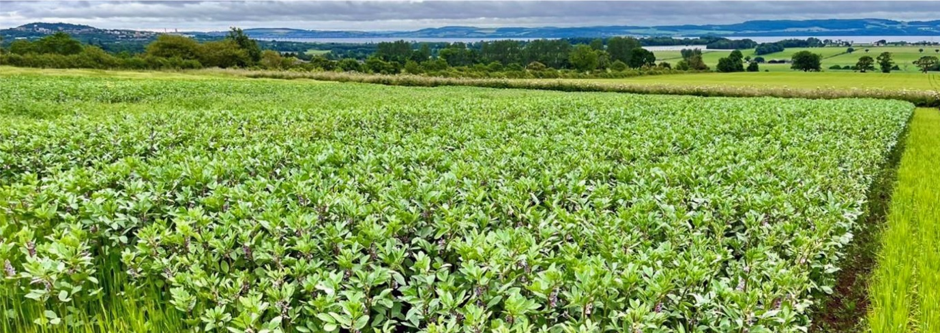
Industrial hemp, for example, offers opportunities across fibre, food and circular economy products, while legumes such as peas are being explored for both nitrogen fixation and innovative uses like alcohol production. These examples highlight the potential for diversification, but they also emphasised the complexity.
Processing infrastructure emerged as a major bottleneck. Without the ability to process and add value to new crops, production alone is rarely profitable. Market demand must also be developed in parallel, and regulatory frameworks can add further hurdles, as seen with hemp licensing.
Across all examples, three needs stood out; tailored agronomy support for unfamiliar crops, innovation in processing technologies, and strong market demand that recognises environmental benefits. Where these elements align, science-led innovation can significantly reduce risk, but only when mutual gain is designed across the supply chain.
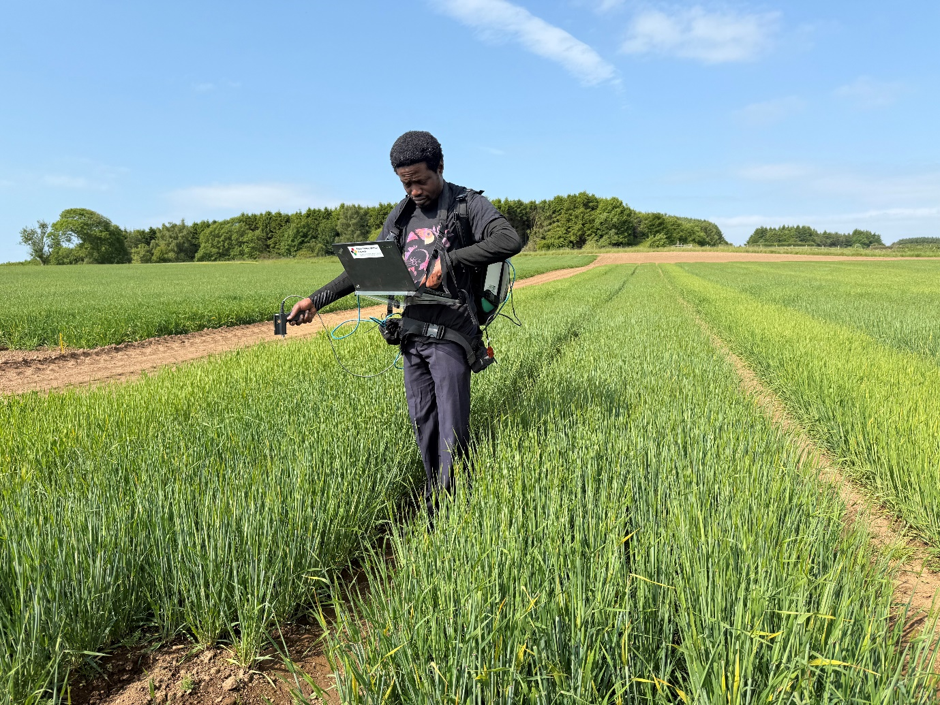
spectral reflectance measurements being taken at the Hutton
Skills for a changing sector
While much of the discussion focused on land and crops, the final session turned to people. Participants agreed that the future arable workforce will need far more than technical expertise.
Interpersonal skills—reliability, communication and collaboration—are becoming just as important as agronomy.
Farmers and industry professionals alike highlighted the need for continuous learning, openness to new ideas and a stronger understanding of business and marketing. Digital literacy is also increasingly vital, particularly as data and decision-support tools become more embedded in farming.
At the same time, there is a widening gap between agriculture and the public. Many participants expressed concern about limited understanding of food production, particularly among younger generations.
Addressing this will require more than information; it will need better storytelling, education and opportunities for people to connect directly with farming.
Within the sector, knowledge exchange also needs to evolve. Farmer-to-farmer learning remains highly valued, while wider engagement may require new approaches such as open farm initiatives and targeted education programmes. Importantly, there is still a disconnect between research and practice. Farmers are keen to engage, but funding structures and short research cycles often limit real-world impact. Farmer-led trials and collaborative models are seen as promising ways to bridge this gap.
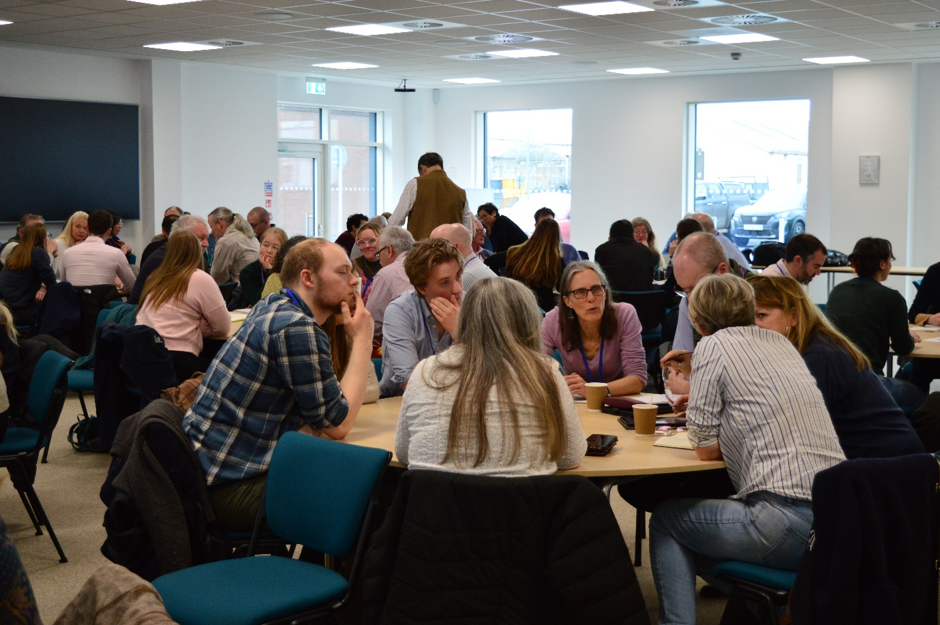
Arable Futures
From insight to action
Taken together, the discussions at Arable Futures paint a picture of a sector at a crossroads. Climate change, market pressures and geopolitical uncertainty are increasing disruption, but they are also creating space for innovation.
The path forward will not be defined by isolated interventions. Instead, resilience will come from integrating soil management, diversification, collaboration and selective use of technology. Success will depend on aligning production with processing capacity, market demand and environmental goals.
Perhaps most importantly, the event highlighted a shift in mindset. The sector is no longer simply preparing for the future; it is beginning to recognise its role in shaping it.
Arable Futures 2026 demonstrated a strong appetite for collaboration, tempered by realism about the challenges ahead. The task now is to turn shared understanding into coordinated, collective action that can deliver a resilient and sustainable future for Scotland’s arable sector.
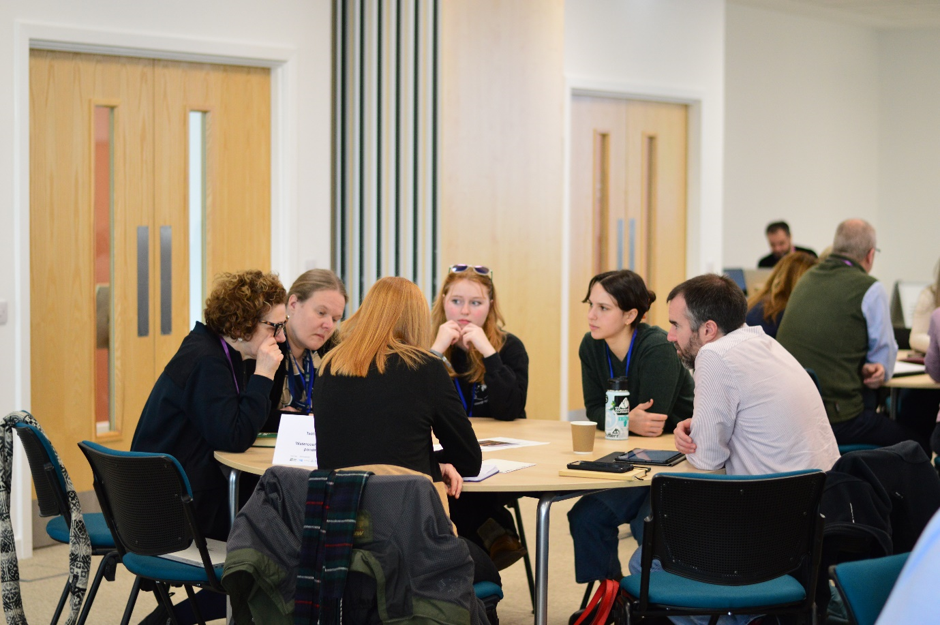
Arable Futures discussion